After completing their learning on Trauma-Informed Education, the participants of the inaugural cohort created capstone projects that they have shared with the community. Course participants were asked to select one principle or insight from their learning journey and consider how they may apply it to their specific context. Each capstone includes a video from the participants and supporting documentation that you may explore.
Bringing Joy to the Classroom Through Safety, Self-Care, and Emotional Awareness
Charmele Ayadurai
“I applied Trauma Informed Teaching Pedagogy in my Sustainable Banking module. The module is built on a workshop style setting where student’s participation is the key for a successful workshop. I applied the principle of safety in my classroom.”
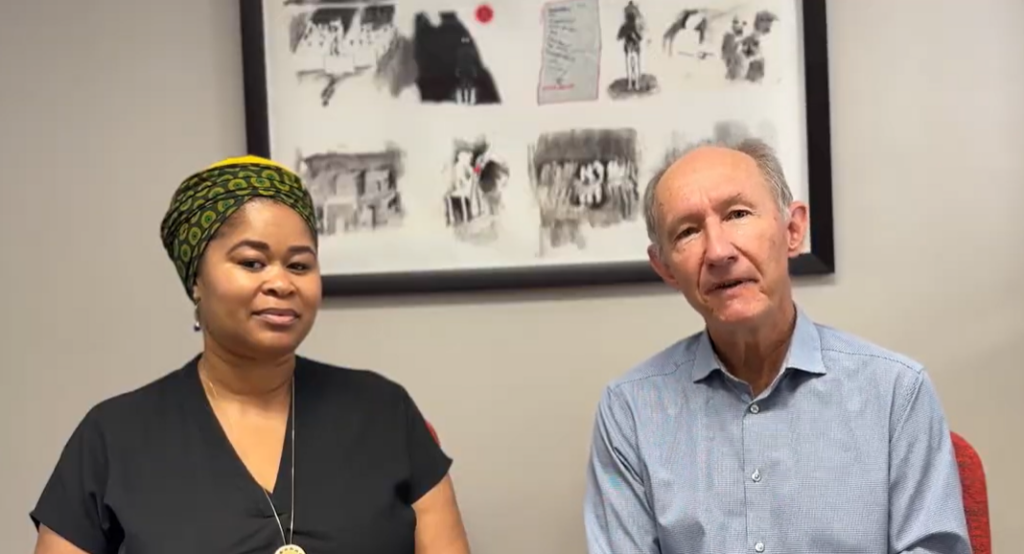
Cultivating Relational Capacities to Work Across Difference
Ayanda Nyoka & Wilhelm Verwoerd
“We use the metaphor of deep waters to convey the feeling of being unsafe often associated with conversations on racial transformation at a historically white university grappling with its legacy of exclusion…To create safety, we encourage participants to embrace discomfort rather than avoid it. Our learning journeys are designed to help them become aware of their emotions and, through body-based activities, build their capacity to stay engaged in the face of discomfort, thus opening themselves to change. These activities are informed by neuroscience, which emphasizes the connection between our thoughts, feelings, and the nervous system.”
Fostering Resilience and Empowerment through Trauma-Informed Education
Jasho Bomu
Kilifi, Kenya
“I use approaches that intertwines education with lived experience, with a particular focus on the Narrative Healing Principle. It encourages students and community members to share and shape their stories of trauma, resilience, and empowerment within the context of their ecological and socio-economic realities in a safe setting. Trauma-informed education, in this sense, doesn’t just teach about trauma—it invites participants to process their collective experiences, fostering both personal healing and community-wide understanding through storytelling and art. The stories, expressed through oral, written, or visual formats, promote healing while raising a deep engagement with the material realities of marine conservation and beekeeping.”
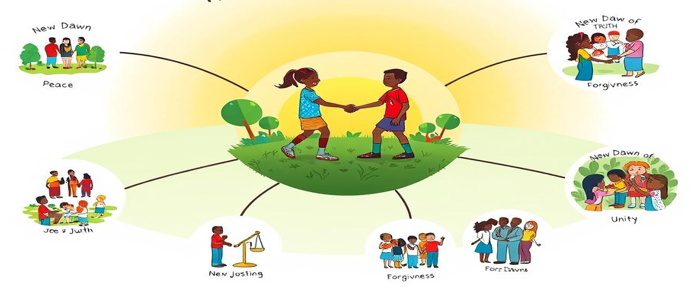
Towards a New Dawn of Reconciliation Using Community Empowerment
Enock Jefwa
Malindi, Kenya
“Trauma-informed care (TIC) acknowledges the pervasive impact of trauma on individuals and communities. This project outline aimed at educating Students and youth in both school and out of school community settings, emphasizing meaningful community empowerment principles. The program is aiming to create sustainable livelihood impacts by equipping young people with knowledge and skills that enhance their ability to cope with Trauma, adaptive well-being and resilience.”
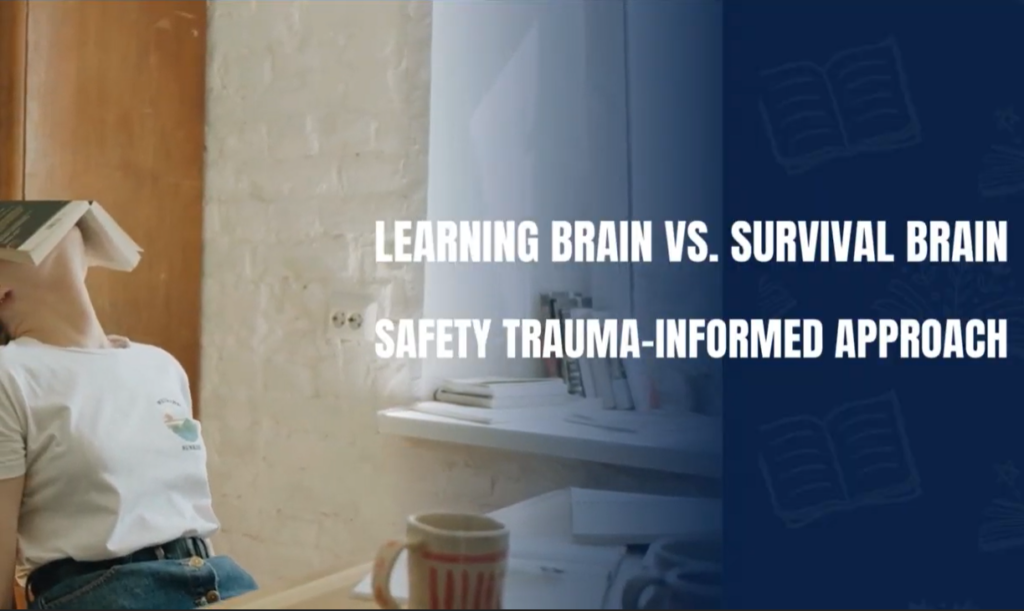
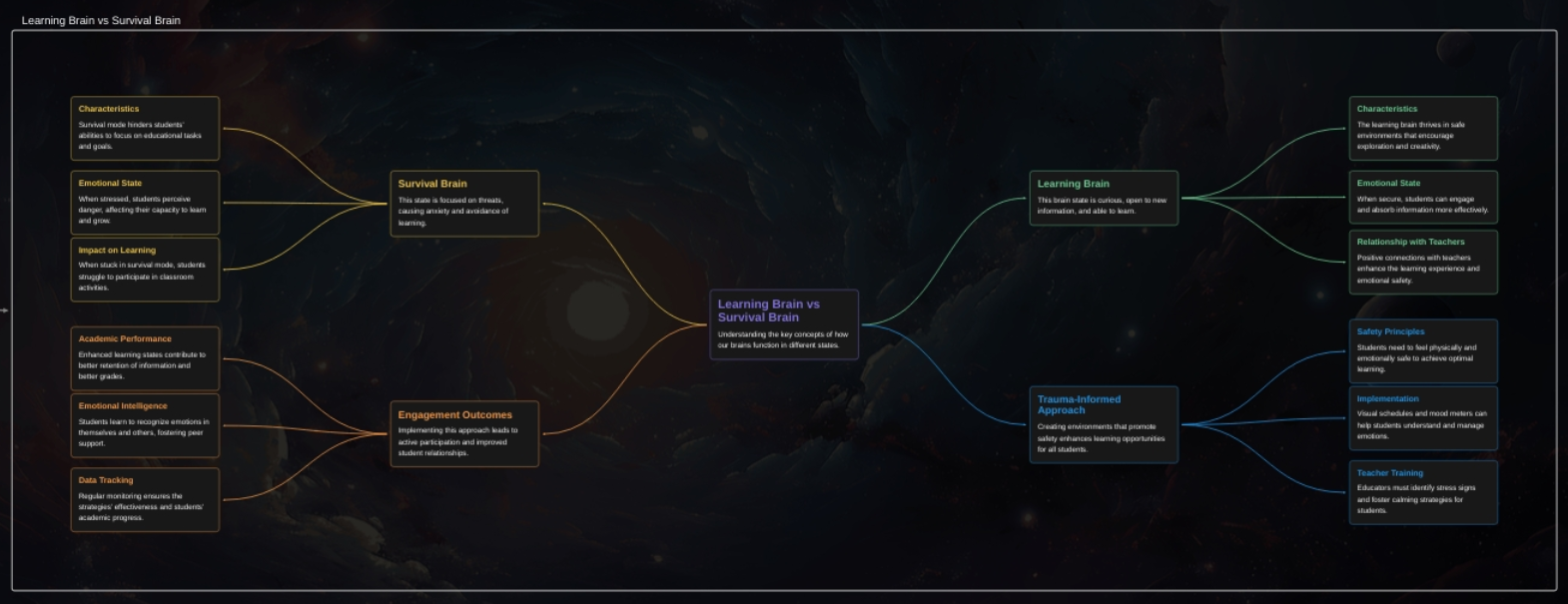
Learning Brain vs. Survival Brain: Safety Trauma-Informed Approach
Marwa Emara
Egypt
“The “learning brain” is open to new information, curious, and comfortable with ambiguity, while the “survival brain” is hyper-focused on threats, anxious, and avoids risks. In educational settings, when students experience stress or trauma, their brains can get stuck in “survival mode.” This means they are constantly alerted and can’t pay attention in class. By understanding how stress and trauma affect the brain, teachers can better recognize these signs in their students. They can then implement strategies to create a safe and supportive learning environment that helps students feel calm and secure, allowing them to shift from survival mode back to a learning-ready state where they can focus, learn, and grow.”
Igniting Student Empowerment through Collaborative Development of Trauma-Informed Education
Rana Najjar
“My capstone project is to guide and mentor students in developing TI training for themselves and their peers….there are multiple opportunities for students to get involved in this work through their course work, organically generating opportunities for experiential learning and meaningful work. With the data from the spring term and integrating their lived experiences, these students will have the opportunity to collaborate on examining, curating, and deciding on the curriculum of the training.”
“I decided to focus on helping my undergraduate Education students understand the concept of an “amygdala whisperer,” or a person who can regulate their own emotional responses and – crucially – help others regulate their own emotional responses. I want the future teachers that I work with to develop their own amygdala whispering-skills, so that they can empower themselves and others to become self-regulated learners who can recognize when their stress is not productive and can utilize healthy coping strategies. My hope is that by framing this work as an important skill they should practice on behalf of their own future students, I will also help my students reflect metacognitively and develop their own regulation skills.”
Restorative Relationships in the Dissertation Space: Co-creating Safety with Doctoral Students
Terry Jo Smith
Chicago, USA
“This project focuses on co-creating safety in the dissertation process with doctoral students. Safety is fundamental to learning, and yet the dissertation process is riddled with stress for many students and dissertation chairs. Too often, we focus on the instrumental aspects of research and writing, ignoring the stress that stems from the enormity of the task, fears related to failure, stereotype threat, and conflicts between completing the dissertation and job and family obligations, to name a few. Given that ongoing critique of students’ work is central to the process, the conditions are ripe for mounting stress. This stress runs counter to students’ abilities to engage in the demanding work before them. For some, sitting down to work on their dissertation leads to what we often call “writer’s block,” but may be the brain’s response to stress, activating the limbic system and shutting down the prefrontal cortex.”
Identifying and Using Professional Identity in Client Centered Services for the Legal Professional
Lynnae Thandiwe
USA
“In the legal field, we are generally helping others navigate a legal issue that is related to some trauma. As part of trauma informed education we can be better equipped to help our clients if we understand their trauma and our own trauma. As a client navigates through a legal problem their emotions and well being will not be static. We can develop tools and strategies to help the clients and help ourselves as practitioners.”
Using the Dewsbury-Brame Framework for Developing Inclusive Classes
Michelle Withers
New York, USA
“Therefore, as a professional developer, my capstone plan is to include this in three of my professional development endeavors. I have already included instruction on this concept in my DEI in Higher Education course for upper-level undergraduate and graduate students and my Evidence-Based Teaching Institute for current and future faculty at Binghamton University during this spring semester. Additionally, I will include instruction on this concept in the Inclusion/Equity workshop for my international pedagogy workshop, the Mobile Summer Institutes on Scientific Teaching (MoSI).”
Trauma-Informed Education for Faculty from a Faculty Developer Perspective
Constanza Bartholomae
USA
“With this project, I am hoping to take the following steps: Promote awareness of trauma’s impact on learning, foster psychological safety in faculty development spaces, encourage flexible and compassionate teaching practices, and promote self-care and well-being for faculty.”